No such thing as “hard”,
maybe you're just not real enough to do it.

I have been having a series of conversations about the concept of “hard” vs “challenging”. I’m a believer that nothing is really hard and everything you choose to do is easy; it is just a matter of showing up.
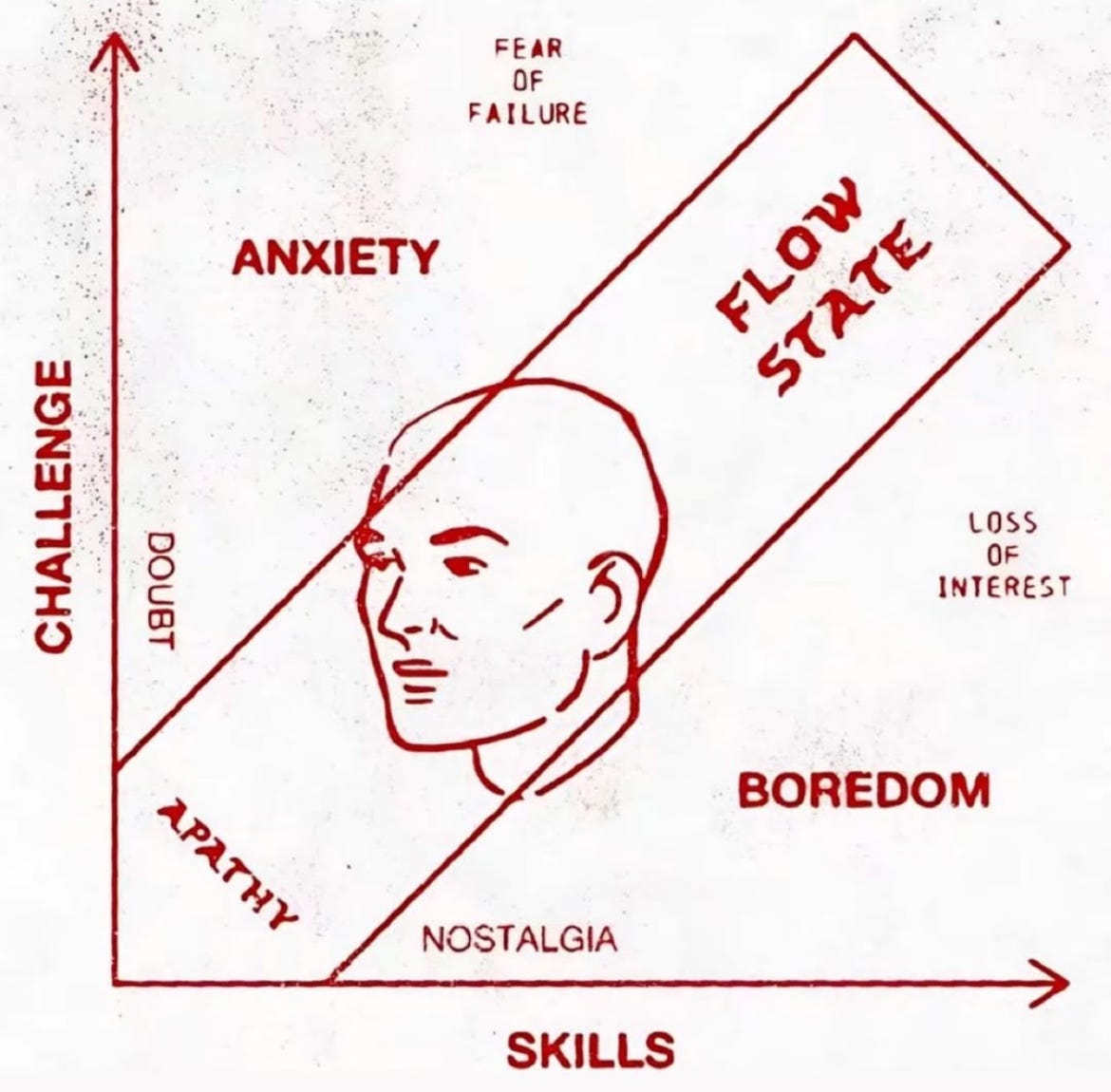
I believe that authenticity in decision-making serves as both compass and catalyst—not only revealing whether something is truly 'hard' or merely 'challenging,' but ultimately determining whether our chosen paths will lead to fulfillment or frustration. The stakes of this authenticity question couldn't be higher, especially during our formative decades. When we make decisions authentically, we build lives that feel like extensions of ourselves rather than burdens we carry; when we don't, we risk waking up years later in lives we've constructed but never truly wanted to inhabit.
A new friend, a SWE Saint, said that those who see a task as “hard” are more than likely behind the starting line. Those who see something as hard to do are probably either aware of a general set of steps to complete the goal or are aware that there's a lot that they do not know and both choose to interpret these conditions as “hard”. If video clips have taught me anything about neuroscience, it's that if we say it, then our brains will believe it, and bridge the gap between our words and spoken reality for us. I think that the idea of a challenge incorporates awareness of potential steps to a solution but there's a wide array. Challenges are overcome with intelligence. Intelligence being the ability to get what you want.
One conversation I have been having repeatedly and understandably for someone in their 20’s is about making the right decisions. The 20’s are said to be the time that the decisions you make have an impact on the remainder of your life. The partner you chose, career path, and investment decisions; all bleed into later in life if you make it there. I had a conversation with my friend Christian, an architect and furniture designer, about the idea that hard or difficult things to do may be more worthwhile. Coincidently, both of our mothers have told us that the easier path is probably the right one. This led us to discuss how this dilemma can be solved through authenticity. Our perception of difficulty may reflect whether we're approaching a task authentically
Starting with challenging goals. I do think that there are great rewards for accomplishing challenging tasks. That's the whole idea of entrepreneurship, finding a market and a problem that either no one has solved for or finding a better way to solve an old problem. The challenge has to be great enough that solving for it makes life so much easier that people will pay you for the solution. In my third startup attempt I made the classic mistake of falling in love with a technology rather than a problem. It got to a point where I was trying to fit a technology into a problem that no one asked me to solve for; in the way that I was looking to. There's still a part of me that thinks I was right but that maybe it was just poor marketing and timing.
The more I conducted customer discovery and understood the root of the problem the less my initial proposed solution worked. Life became miserable in convincing myself that this was a challenge I just needed to pivot or brute force through. I didn’t want to give up on the opportunity I saw. Life got hard because I was observing an endpoint and not really knowing where the starting line was. And when I did find it, I became disinterested and tried fitting a square into a circular hole. Fortunately this didn’t last for long. As I was able to connect the fact that my disinterest indicated an inauthentic desire to solve the problem. Acknowledging this freed me up for more enjoyable and creative problems to solve. In fact it gave me time to write this letter.
Another thing Christian and I talked about in terms of hard or easy goals was creative procrastination vs divine timing. Sometimes we see a goal and acknowledge its challenging or “hard”. Even though it stays on our mind, life finds a way to put other tasks in front of us. On one hand I’ve cleaned the bathroom instead of studying because I knew I’d encounter a challenge. Creative procrastination. On the other hand, I’ve experienced and heard stories about how these life detours later inform our approach to the idea that was stuck in our mind. My time running an art atelier definitely informs my methods as a health and wellness entrepreneur. I think the difference between creative procrastination that informs our story and divine timing is authenticity and discipline. Even though my atelier isn’t open now, I made the decision to run that business because I really wanted to and also saw a genuine need. It wasn’t a way of procrastinating my way to what I’m doing now. I was disciplined and authentic enough to live each day as I chose and then change to a new path when I saw the winds turning.
In our discussion, a more general example of this that Christian and I worked with was the person inauthentically deciding to go to law school. Their goal is to become a lawyer because they think it will afford them the ability to follow their true passion; acting. Authenticity in decision making does one of two powerful things. It gives us experience to decide if continuing down the path leads to an enthusiastic no or yes. That's not to say the lawyer was wrong. Having a nest egg to then pursue a statistically high risk acting career is fine. If that was really what they want and believe they should do. It's the person that inauthentically moves through decisions and applies discipline to inauthenticity that has the midlife crisis later.
Our authentic choices don't exist in isolation either. We better serve our communities when we value and implement authenticity, honesty, and integrity. When we align our work with our true selves, we create ripples that extend far beyond our individual satisfaction. Our authentic contributions resonate more deeply, inspire more genuinely, and solve problems more effectively because they emerge from a place of genuine connection rather than obligation. As we navigate our individual paths—deciding what's truly challenging versus what's merely perceived as hard—we're simultaneously shaping the collective spaces we inhabit. In a world where identities are increasingly engineered by external forces, choosing authenticity becomes not just a personal act of liberation, but a radical contribution to a more genuine society. Perhaps our most valuable offering to community isn't just what we do, but how authentically we show up to do it.